
The Federal Government has called for increased private sector investment in Nigeria’s power sector, identifying improved gas supply, faster metering and the rehabilitation of existing infrastructure as key steps towards delivering more reliable electricity to consumers.
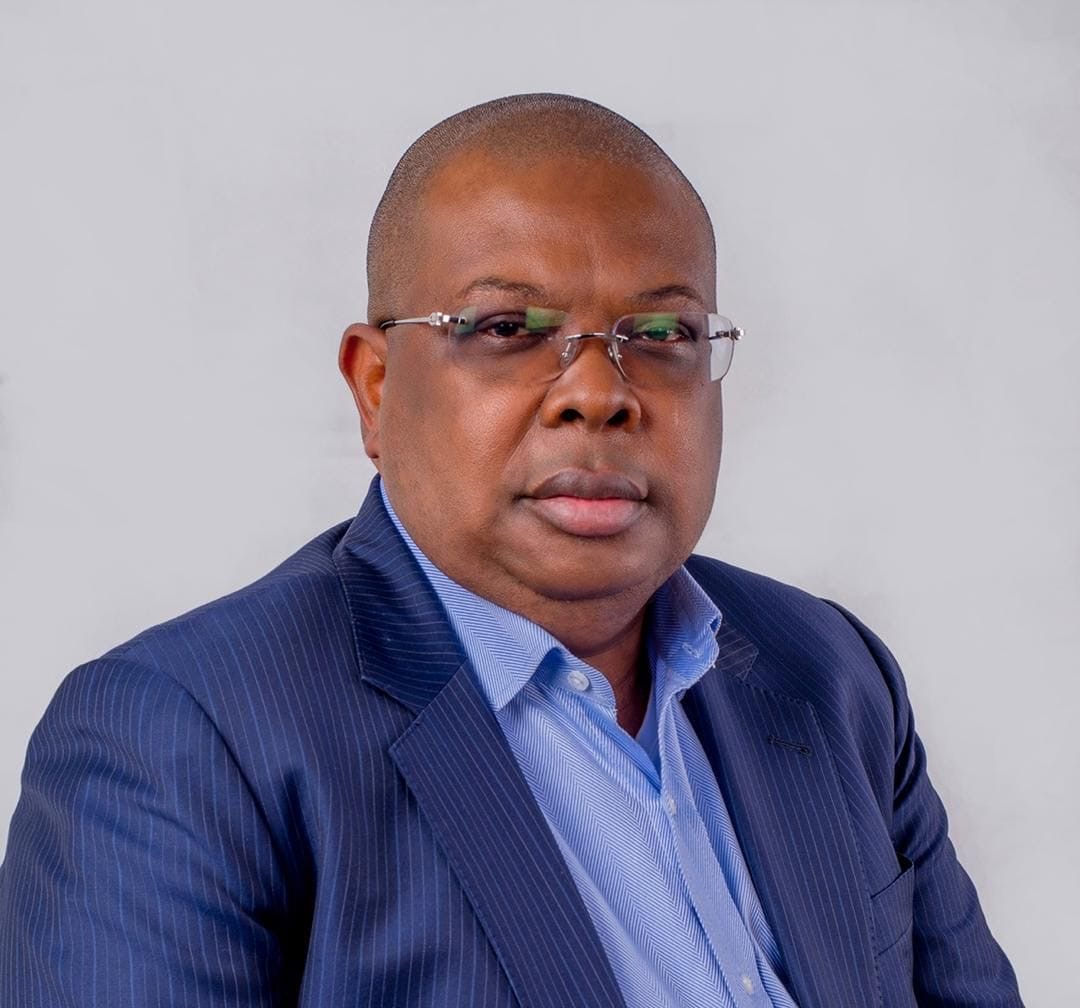
The Minister of Power, Joseph Tegbe, made the call at the NAEC Energy Conference 2026 in Lagos on October 7, where he urged investors to focus on projects that address the sector’s most pressing challenges rather than simply adding more generating capacity.
Tegbe, whose remarks were delivered by the Ministry’s Acting Director of Press, Clement Ezeorah, said the real value of an energy asset lies in its ability to deliver electricity that consumers can use and pay for.
He noted that investments must be directed at the specific problems affecting supply, whether inadequate gas, poorly maintained power plants, transmission limitations, distribution challenges or difficulties collecting payments.
According to him, investing in additional generating capacity would make little difference to consumers if the real problem lies elsewhere in the electricity value chain.
The conference, organised by the Association of Energy Correspondents of Nigeria, had the theme “Access to Assets: Empowering Players and Driving Growth.”
Tegbe identified several opportunities for investors, including rehabilitating existing power plants, improving gas supply, upgrading distribution infrastructure and developing energy projects for industrial and commercial users.
He also encouraged investors to explore dedicated power supply for industrial estates, ports and agro-processing centres, as well as distributed energy projects supporting activities such as irrigation, refrigeration and small-scale manufacturing.
Gas producers were similarly urged to partner with developers and industrial users on integrated gas-to-power projects.
The minister said investors should consider not only the direct returns from acquiring or developing energy assets but also the wider economic benefits of reliable electricity, particularly for manufacturing, logistics and services.
He added that the ministry would pursue partnerships built around clearly defined responsibilities, achievable timelines and measurable improvements in service delivery.
Speaking during a panel session, Ezeorah also highlighted efforts to improve accountability across the power sector, including closer monitoring of gas supplied to generating plants, electricity transmitted through the grid and payments made within the market.
He said these measures were intended to reduce Aggregate Technical, Commercial and Collection (ATC&C) losses, which continue to affect the financial health of electricity distribution companies.
The ministry representative disclosed that about 350,000 meters had been deployed in the preceding three months, as the government seeks to reduce dependence on estimated billing and allow consumers to pay based on their actual electricity consumption.
However, he acknowledged that poor collection efficiency and liquidity challenges remain major concerns for distribution companies. Some outstanding debts, he noted, date back to the sector’s privatisation in 2013, with the government working towards resolving the legacy issues.
A performance dashboard is also being introduced to enable stakeholders to monitor service delivery and assess progress across the sector.
On decentralised electricity generation, Ezeorah said embedded and distributed power projects should complement the national grid rather than serve as a replacement for it. He maintained that an interconnected grid would remain necessary as electricity demand increases.
He also identified vandalism of power infrastructure as a major obstacle to expansion, noting that resources that could have been used to extend transmission lines are sometimes diverted to repair damaged facilities.
The government, he said, is pursuing public advocacy to encourage communities to protect electricity infrastructure, warning that vandalism ultimately disrupts supply and affects the same residents the facilities are meant to serve.
The government’s position reflects a broader effort to attract investment while addressing longstanding challenges in generation, transmission, distribution and revenue collection. Whether the measures translate into more reliable electricity will depend on their implementation and the sector’s ability to turn investment into improved service for consumers.
What do you feel about this post?

Like

Love

Happy

Haha

Sad