
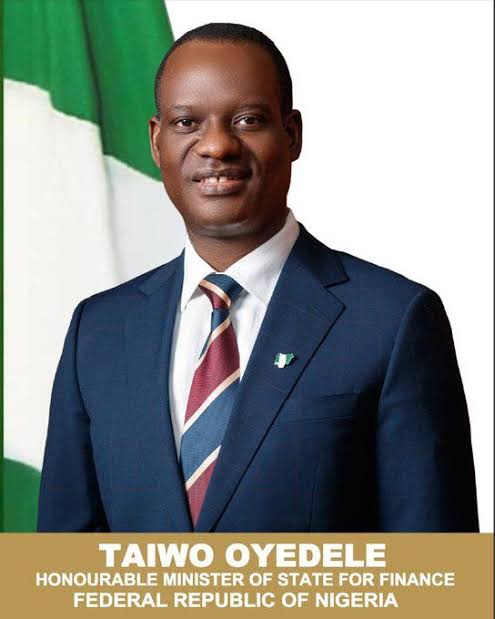
For the commuter in Lagos, the farmer in Kano and the trader in Aba, the price of petrol has become the first worry of the day. On Friday, the Minister of Finance and Coordinating Minister of the Economy, Professor Taiwo Oyedele, told journalists the government feels that pain, but will not bring back fuel subsidy to ease it.
Speaking at a press briefing, Oyedele said petrol now averages about N1,400 a litre, up from about N830 before the conflict in the Gulf began, when crude was near $70 a barrel. He blamed the rise on a war now in its eighth month. By mid-September, shipping through the Strait of Hormuz was running at about 13 percent of its pre-war level, and Brent crude is trading above $100 a barrel, almost 50 percent higher than before the war.
“Prices have risen, and Nigerians are feeling it,” he said, adding that the concern is legitimate. He noted that the shock has hit other countries too. Diesel in the United States has reached a record $6.50 a gallon, and in the Philippines it has nearly doubled. He said Zambia’s pump prices jumped about 24 percent in one adjustment once its fuel duty relief ran out, which he described as pain postponed rather than removed.
He said one thing Nigerians have been spared is queues, since fuel has remained available in every state. “In a crisis of this kind, availability is the first form of affordability,” he said.
Why a subsidy would backfire
Oyedele addressed recent calls for a return to subsidy, including a proposed “production subsidy” for local refining. He said he does not question the motives behind them, but argued the idea is a consumption subsidy by another route, with the same bill attached.
He gave four reasons. Pump prices follow the exchange rate, so holding them down means subsidising foreign exchange, the multiple-rate system he said brought the economy close to collapse before 2023. A subsidy also hides volatility rather than removing it, moving the risk onto the public purse.
The cost, he said, would be heavy. With Nigeria consuming about 50 million litres of petrol daily, returning to the pre-reform price would cost over N20 trillion a year. Even a N500 per litre price would cost more than N16 trillion, nearly everything shared among the three tiers of government from the Federation Account in 2025. He asked what that would mean for salaries, pensions, schools, hospitals and security.
Cheaper fuel would also leak across borders, as it did for years, and raise domestic consumption when global supply is tight. Finally, he recalled that subsidy removal released N15.8 trillion to the Federation Account between June 2023 and December 2025, with N10.4 trillion going to states and local governments. In May 2023, he said, 27 states could not reliably pay salaries. Today, none is in that position.
Reversing course, he warned, could trigger a credit downgrade, costlier borrowing, capital flight and a weaker naira. The government’s estimate is that the exchange rate could approach N3,000 to the dollar within months, and so-called subsidised petrol would cost at least N2,000 a litre. “Short-term relief bought with long-term fragility is the most expensive money a government can spend,” he said.
He invited anyone with a better idea to show their numbers: what it costs, how it is funded sustainably, and what pump price it delivers.
What government says it has done
Oyedele said removing subsidy never meant doing nothing. He pointed to waivers of taxes and duties on petroleum products, which he said save consumers between N400 and N600 a litre and are worth over N3.3 trillion for the year to 30 September 2026. Petrol in Nigeria, he said, is 20 to 30 percent cheaper than in Benin, Togo and Cameroon, and about 35 percent below the world average.
He also cited the naira-for-crude arrangement for local refiners, a narrowing of the gap between official and parallel exchange rates from over 60 percent to under 5 percent, and reserves of about $55 billion, the highest in eighteen years. On alternatives, he said more than 120,000 vehicles now run on CNG, with over 550 CNG buses deployed, and that fares have fallen by 30 to 50 percent where they operate.
New measures
To ease the pressure further, Oyedele announced a package of steps:
- A margin discount on petrol at NNPC stations for 30 days, with priority for public transporters nationwide.
- Forward sales of crude to domestic refineries to shield pump prices from global swings.
- A planned ceiling of N1,350 a litre on the ex-gantry or landing cost of petrol, with refiners and importers absorbing any excess and recovering it later without breaching the ceiling. He said this is neither a subsidy nor a price control, and that the ceiling will be reviewed monthly and the figures published.
- Action with the states to remove illegal road levies that inflate fares and logistics costs.
- More funding for cash transfers to vulnerable households and subsidised credit for small businesses and consumers.
- A faster CNG rollout, with transporters urged to pass savings on to passengers.
- A possible excess profit tax on operators who exploit consumers, with proceeds used for transport support or vouchers for urban minimum wage earners, plus enhanced tax relief for low-income earners under the 2027 Finance Bill.
- Cuts in regulatory red tape that add to the cost of doing business.
- A National Strategic Fuel Reserve, to release refined products under published rules when disruption or hoarding threatens supply.
- Better traffic management in major cities and more efficient logistics through NIPOST’s new address codes.
He stressed that none of these restores a blanket subsidy.
A promise on inflation
Oyedele admitted that subsidy removal has come at a price and that many households are still paying it. He said the reform must not be reversed, but its gains must reach more Nigerians faster. He added that the government is preparing a comprehensive package of fiscal measures to bring inflation down to single digits, with details to follow in the coming months.
What do you feel about this post?

Like

Love

Happy

Haha

Sad